
Pelvic Issues Affecting Your Daily Life? Pelvic Floor PT in Houston, TX Can Help

Pelvic pain, bladder changes, bowel trouble, and shifts in intimacy are common, and they are not something you have to accept as normal. A clear test result doesn't mean nothing is wrong. It usually means the real cause hasn't been found yet.
I hear this every week in my practice. Pelvic issues rarely show up as one clean symptom; they show up as pain in one place, bladder trouble in another, and changes in intimacy no one warned you about. Pelvic floor physical therapy in Houston, TX is often the piece that finally explains what's going on, and once you know the cause, there's a real path to relief.
Key Takeaways
- Pelvic floor dysfunction means the muscles supporting your bladder, bowel, and reproductive organs are too tight, too weak, or not coordinating properly.
- It shows up in more ways than pain alone: bladder habits, bowel function, intimacy, and physical stability can all be affected.
- Kegels are not a universal fix. For some people, they make symptoms worse.
- Normal test results don't rule out a real, treatable problem.
- Pelvic floor physical therapy is non-surgical, evidence-based, and works for men and women.
- I'm Katie Beckham, and I treat pelvic floor dysfunction as a pelvic floor therapist in Houston, TX, working with men and women one-on-one in a private, home-based setting.
What Is Pelvic Floor Dysfunction?
Your pelvic floor is a group of muscles stretching from your pubic bone to your tailbone and from hip to hip, forming a basket of supportive muscles. It supports your bladder, bowel, and reproductive organs, and plays a direct role in urination, bowel movements, and intimacy.
Pelvic floor dysfunction happens when these muscles stop working the way they should, either too weak to hold things in place, too tight to relax when they need to, or a mix of both in different muscles at once.
This is not one disease with one symptom. It's a pattern, and the pattern looks different for everyone. That's why so many people go months or years without a clear answer, and why the right pelvic floor dysfunction treatment in Houston, TX, starts with someone who looks at the whole picture instead of one symptom in isolation. The right pelvic floor therapy in Houston, TX, depends on understanding which pattern you're dealing with, not only naming the diagnosis.
What Does Pelvic Floor Dysfunction Feel Like?
Pain
- Pelvic, vaginal, testicular, penile, or rectal pain
- Tailbone pain (coccydynia)
- Groin or lower abdominal pain that doesn't ease with stretching or rest
- Pain with prolonged sitting
Bladder and bowel symptoms
- Urinary urgency, frequency, or a weak or slow stream
- Trouble fully emptying the bladder or bowel
- Leaking urine or stool
- Constipation, straining, or painful bowel movements
Sexual and intimacy-related symptoms
- Pain during or after sex (dyspareunia)
- Erectile dysfunction linked to pelvic floor tension
- Painful ejaculation or decreased sensitivity
- Involuntary tightening that makes penetration painful or impossible (vaginismus), or chronic burning pain in the vulva (vulvodynia)
- Painful orgasm
Pregnancy, postpartum, and post-surgical symptoms
- Pelvic pressure, heaviness, or leaking with coughing, sneezing, or exercise
- Diastasis recti (abdominal muscle separation)
- Sharp pain at the front of the pelvis or in the lower back with walking or turning over in bed (pubic symphysis dysfunction or SI joint pain)
- Symptoms following prostatectomy or other pelvic surgery
- Pain or numbness from surgical scarring
Most people only connect one or two of these to their pelvic floor. In my experience, they're almost always related, and treating them together gets better, faster results than chasing each symptom on its own.
What Causes Pelvic Floor Dysfunction?
| Category | What it looks like |
|---|---|
| Muscle-related | Muscles too tight, too weak, or poorly coordinated |
| Structural or post-surgical | Scar tissue, childbirth, pelvic or abdominal surgery |
| Systemic | Chronic stress, inflammation, prolonged sitting |
A few of these deserve more explanation, because they're the questions I hear most often.
Can stress cause pelvic pain?
Yes. Your pelvic floor muscles respond to stress the same way your shoulders or jaw do, by holding tension. Over time, that constant guarding can turn into real, physical pain, not something you're imagining.
My tests came back normal. Why do I still hurt?
Because pelvic floor dysfunction is a functional problem, not always a structural one. Imaging and lab work look for damage or disease. They don't measure whether your muscles are coordinating correctly, which is exactly what a pelvic floor physical therapist in Houston, TX is trained to assess.
Getting the right pelvic pain physical therapy in Houston, TX starts with identifying which of these categories is driving your symptoms. The treatment for tight, overactive muscles looks nothing like the treatment for weak ones.
Do Kegels Fix Pelvic Floor Problems?
No, not always, and this surprises most people. Kegels strengthen weak muscles. But if your pelvic floor is already too tight, a Kegel asks an overworked muscle to contract even harder, which can make pain and tension worse instead of better.
The advice is simpler than what most people have heard: some pelvic floors need to get stronger, and some need to learn to relax first. Doing the wrong exercise for your specific pattern doesn't only fail to help. It can set you back.
Is Pelvic Floor Dysfunction Different for Men and Women?
The muscles and their basic job are the same. The way dysfunction shows up often isn't.
More common in women: pelvic organ prolapse, pain during sex, postpartum symptoms, vulvodynia
More common in men: erectile dysfunction linked to muscle tension, symptoms after prostate surgery, pelvic pain that gets mistaken for prostatitis
I treat both men and women, which is less common than you'd think in this field. Many men in particular struggle to find a provider who treats their symptoms as seriously as they'd treat a woman's, even though the underlying muscles work the same way.
How Does Pelvic Floor Physical Therapy Work?
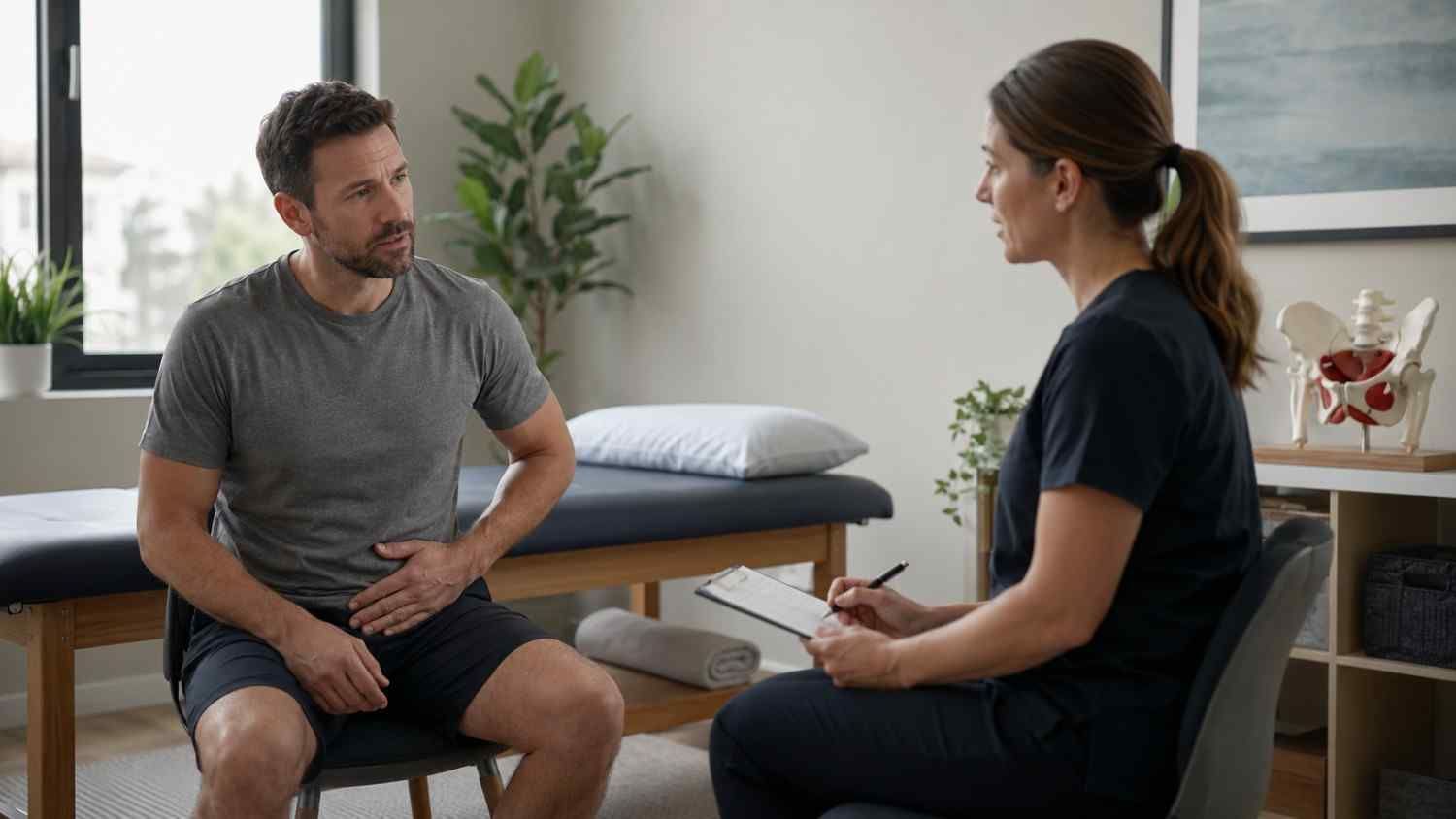
- A private evaluation. I look at your posture, movement patterns, and pelvic floor function to understand what's happening, not only the symptom that brought you in.
- A personalized treatment plan. This might include manual therapy, breathwork, core coordination training, and education on the daily habits keeping symptoms going.
- Ongoing sessions built toward independence. The goal isn't months of visits. It's giving you the tools to manage your own progress.
I don't treat the pelvic floor in isolation. Real recovery involves your nervous system, posture, stress levels, and daily habits, working together, not muscles alone. That whole-person approach is why people come to me for pelvic floor physical therapy in Houston, TX, after other plans only addressed the muscles. It's also the most common thing I hear in patient feedback: people who wish they'd started sooner.
Progress isn't instant, and I won't promise it will be. What years of doing this work have shown me is that people who stay consistent with their plan notice real, lasting change.
When Should You See a Pelvic Floor Therapist?
You don't need to wait for symptoms to become unbearable. Consider reaching out if:
- Symptoms have lasted more than a few weeks
- Your test results are normal, but the symptoms haven't gone away
- Pain, bladder issues, or intimacy problems are affecting your daily life
As a pelvic floor therapist, I've spent more than 15 years focused exclusively on pelvic health, working with men and women across Houston, Memorial, Bellaire, Spring Branch, and the surrounding areas. Every session is private and one-on-one, in a home-based setting, with treatment starting at your first visit. If you've been searching for pelvic floor dysfunction treatment in Houston, TX, or you're ready for real answers about pelvic pain physical therapy, I'm here to help you get there.
Frequently Asked Questions
Do I need a doctor's referral for pelvic floor physical therapy in Texas?
No. Texas allows direct access to physical therapy, so you can schedule an initial evaluation without a referral. A physician does need to approve your Plan of Care afterward, which I handle for you.
Is pelvic floor therapy painful?
It shouldn't be. I tailor treatment to your comfort level and adjust techniques if anything feels like too much. The goal is relief, not additional pain.
How long does pelvic floor therapy take to work?
Most people notice a difference within 3 to 6 sessions. Full recovery time depends on how long you've had symptoms and how consistent you are with your home program.
Is an internal exam required?
No. An internal exam can offer useful information, but I never require one. I explain your options, and we only do what you're comfortable with.
Can pelvic floor dysfunction go away on its own?
It's unlikely. Without treatment, symptoms typically continue or slowly worsen, since the underlying muscle pattern doesn't correct itself on its own.
Is pelvic floor therapy covered by insurance?
Most insurance plans cover pelvic floor physical therapy in some form. My practice operates on a cash-pay basis, and I provide a superbill so you can pursue reimbursement directly with your insurance provider.