
Unwanted Genital Arousal That Will Not Stop: Understanding PGAD and How Pelvic Floor Therapy Helps

If you feel a constant sensation of arousal in your genitals that has nothing to do with desire, and it will not switch off no matter what you do, you are not imagining it, and you are not alone. Many of the people I see have already been to several providers and have been told that everything looks normal. The condition has a name, it is recognized in sexual medicine, and it responds to treatment.
I am Katie Beckham, a pelvic floor physical therapist with more than 15 years focused on pelvic health, and I treat both men and women. If you have been searching for
PGAD treatment in Houston, Texas, this guide explains what the condition is, what drives it, and what realistic relief looks like.
What Is Persistent Genital Arousal Disorder (PGAD)?
Persistent genital arousal disorder (PGAD) is a condition in which a person feels persistent, unwanted sensations of physical genital arousal that occur without any sexual desire, last for hours or days, and are not relieved by orgasm.
It was first described in 2001 under the name persistent sexual arousal syndrome (PSAS). The name changed to PGAD because the problem is not about sexual interest. In 2021, the term was expanded to PGAD/GPD, where GPD stands for genito-pelvic dysesthesia. "Dysesthesia" means an abnormal, unpleasant nerve sensation. PGAD is not yet listed in the DSM-5 or the ICD-10, the two manuals doctors use to classify conditions, which is one reason so many providers do not recognize it.
PGAD Is Not a High Sex Drive
PGAD is frequently confused with a high libido or with hypersexuality. It is neither. The defining feature is arousal without desire. The table below shows how it differs from the two conditions it is most often mistaken for.
| Comparison Point | PGAD | Hypersexuality | Priapism |
|---|---|---|---|
| Physical genital arousal | Yes | Sometimes | Erection only |
| Sexual desire present | No | Yes | No |
| Relieved by orgasm | No | Often | No |
| Who it affects | Women and men | Women and men | Men, mainly |
Because the condition is poorly known, it is regularly misdiagnosed as a urinary tract infection, chronic prostatitis in men, or hypersexuality. A wrong label delays the right care, which is why naming the condition correctly matters.
What Does PGAD Feel Like? Symptoms in Women and Men
The core symptom is a cluster of unwanted arousal sensations in the genitals that persist on their own. The exact location and description differ by anatomy.
In women, symptoms commonly include:
- Buzzing, throbbing, or tingling at the clitoris, vulva, vagina, perineum, or anus
- A feeling of fullness, engorgement, or pressure
- A sense of being on the edge of orgasm that does not resolve
- Spontaneous orgasms that bring little or no lasting relief
The women I treat who come looking for women's PGAD treatment in Memorial, Texas, almost always describe this same set of sensations, often made worse by sitting.
In men, symptoms commonly include:
- Spontaneous arousal or a persistent sense of impending orgasm
- Discomfort in the scrotum, perineum, or pelvic area
- Genital fullness without sexual interest
One point I want to be exact about: a man does not need to have an erection to have PGAD, and PGAD is not the same as priapism (a prolonged, often painful erection). They are separate problems with separate causes, and both are addressed in my men's pelvic floor physical therapy for men in the Memorial area.
What Causes PGAD? The Five Regions Behind It
PGAD is not one disease with one cause. It is a symptom that can come from any of five anatomical regions. Identifying the region is the entire point of a good evaluation.
| Region | Where It Sits | Example Driver |
|---|---|---|
| 1. End organs | Clitoris, vulva, vagina | Clitoral adhesions, keratin pearls — hardened skin-cell deposits under the clitoral hood |
| 2. Pelvic floor | Muscles at the base of the pelvis | Hypertonic, chronically tight muscles, trigger points — tight, tender knots within a muscle |
| 3. Cauda equina / sacrum | Lower spine and sacral nerve roots | Tarlov cysts — fluid-filled sacs on spinal nerves, disc problems |
| 4. Spinal cord | Spinal cord pathways | Nerve injury or lesions |
| 5. Brain | Central nervous system | Central sensitization — a nervous system stuck in a heightened, amplifying state, stress |
Known triggers include starting or stopping certain antidepressants (SSRIs), the tissue and lubrication changes of menopause (genitourinary syndrome of menopause), and childbirth. PGAD also shows up alongside restless legs syndrome and overactive bladder, which points to shared nerve involvement.
Key takeaway: PGAD is a symptom with a source. The goal of treatment is to find the region driving it, then treat that, rather than chase the sensation. Whether someone needs pelvic therapy for PGAD in Bunker Hill Village or a referral elsewhere depends entirely on which region is responsible.
How Is PGAD Connected to the Pelvic Floor?
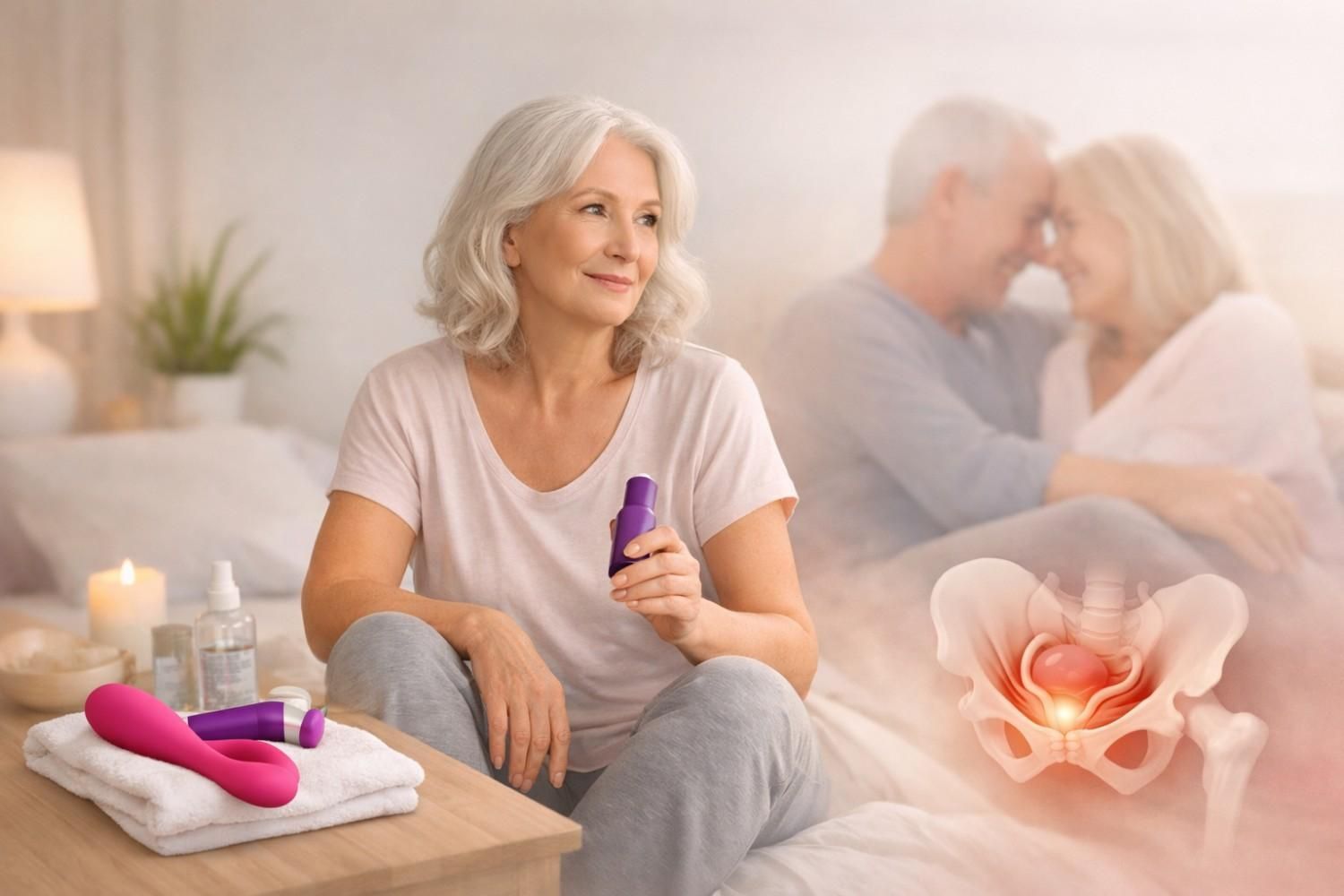
In a large share of cases, the driver is Region 2, the pelvic floor. The pelvic floor is the group of muscles that span the base of the pelvis and support the bladder and bowel. When these muscles stay chronically tight and develop trigger points, they can compress or irritate the pudendal nerve, the main nerve carrying sensation between the genitals and the spinal cord.
The dorsal branch of that nerve carries sensation from the clitoris or penis. When it is irritated, the brain can read the signal as arousal even though no arousal is happening. A frequent compression point is Alcock's canal, a narrow passage along the pelvic wall that the pudendal nerve travels through. This link between pelvic floor tension and sexual function is exactly what PGAD pelvic floor therapy in Spring Branch is built to assess and release.
Can Pelvic Floor Therapy Help PGAD?
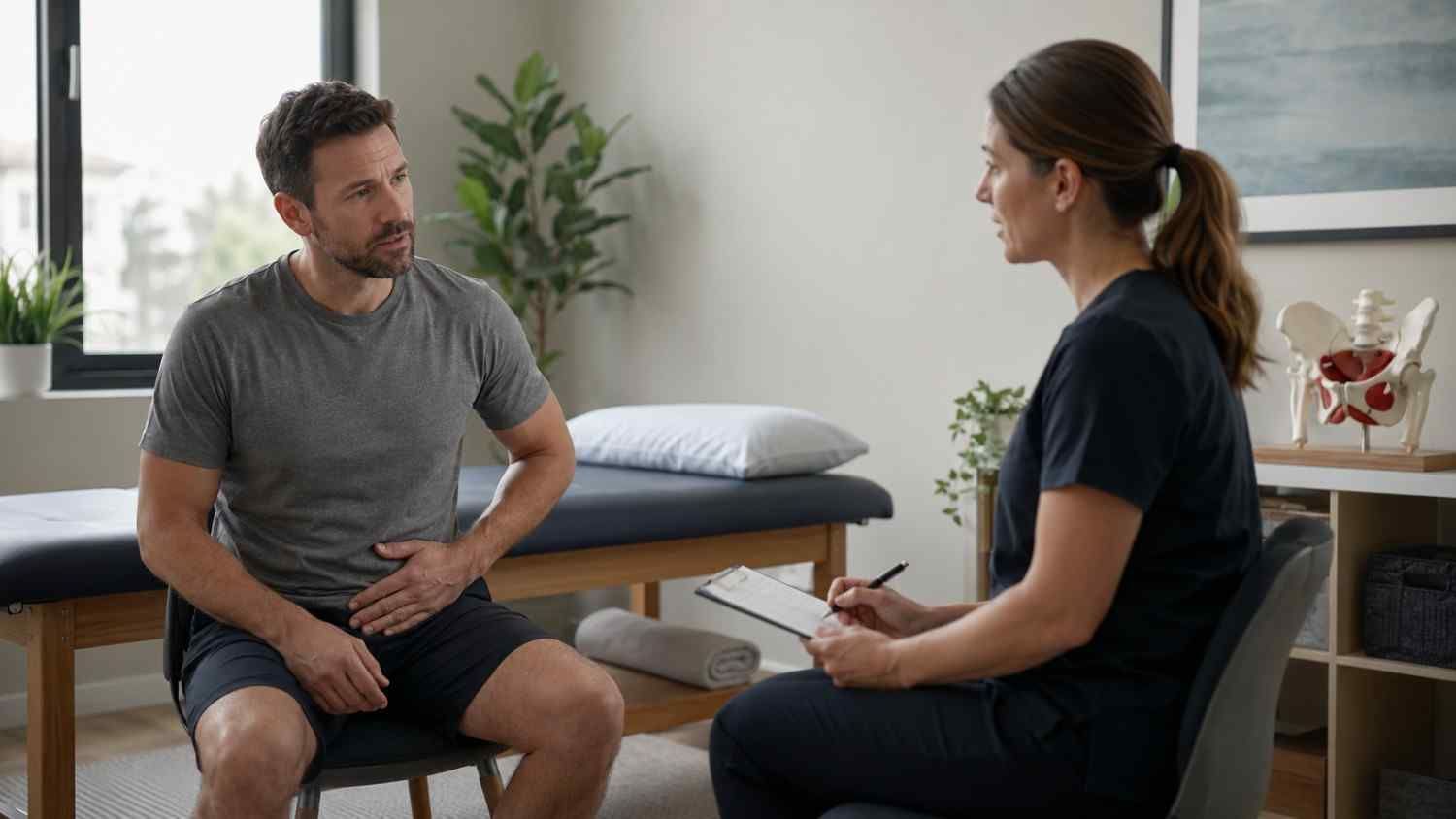
Yes. When the pelvic floor is the driver, pelvic floor physical therapy is a conservative, non-surgical treatment that addresses the cause directly. Here is the process I follow:
- Assess to locate the driver. A full history and a hands-on exam of the pelvic floor muscles and pudendal nerve path to confirm whether muscle tension is the source.
- Release the tension. Manual therapy and myofascial release (hands-on techniques that lengthen tight muscles and connective tissue) to lower muscle tone and free the nerve.
- Calm the nerve signals. Diaphragmatic (belly) breathing and relaxation techniques to settle the overactive nerve signals that amplify sensation.
- Home program. Specific self-care steps so progress holds between sessions.
- Reassess and adjust. Re-check at set intervals and change the plan based on what the muscles and symptoms are doing.
I will be honest about the evidence because you deserve that. There are no large randomized trials yet. Across the published studies, reported success ranges from roughly half of patients to more than 90 percent, depending on the cause. A 2025 case report documented full resolution after four sessions when the pelvic floor was the driver. For people seeking PGAD treatment in Houston, Texas, the realistic message is that meaningful relief is common when the source is identified. That is why persistent genital arousal disorder therapy in Bellaire, as I practice it, always begins with finding the driver rather than treating the symptom in isolation.
How I Help Patients With PGAD
My practice is built for a condition like this one, which requires privacy, time, and focused expertise:
- One-on-one care in a quiet, home-based clinic, with no shared waiting rooms
- Treatment of both men and women, which most pelvic floor practices do not offer
- Treatment that begins at the first visit, rather than a consult-only first appointment
- New appointments within about two weeks, because I limit my caseload
- A whole-body lens, including my training in nutrition and autoimmune health and the HPA axis (the body's stress-hormone system), which is directly relevant to the hormonal and nervous-system drivers of PGAD
I provide PGAD treatment in Houston, Texas, and throughout the surrounding Memorial area, and I treat the cause from the first session forward.
FAQs
Can men get PGAD?
Yes. It is less common in men and less often reported, but men do experience it. In men, it is not the same as priapism, and an erection is not required for the diagnosis.
Is PGAD linked to anxiety or SSRIs?
Stress can worsen symptoms, and starting or stopping SSRI antidepressants has been linked to onset in some cases. Neither is the cause in every person, which is why an individual assessment matters.
Who do you treat?
I treat men and women, including those seeking women's PGAD treatment in Memorial, Texas, and the nearby communities.
You Do Not Have to Keep Living With This
If this describes what you have been experiencing, there is a path forward, and you can begin it in a private, unhurried setting. Call me to book PGAD pelvic floor therapy in Spring Branch or to ask whether pelvic therapy for PGAD in Bunker Hill Village is right for your situation. You can reach me at (281) 728-4604 or through my Contact page. For related symptoms and how pelvic floor care addresses them, see my page on Pelvic Pain and Sexual Dysfunction.