
Prostate Health Therapy in Houston, TX | Men’s Pelvic Care | Beckham Physical Therapy
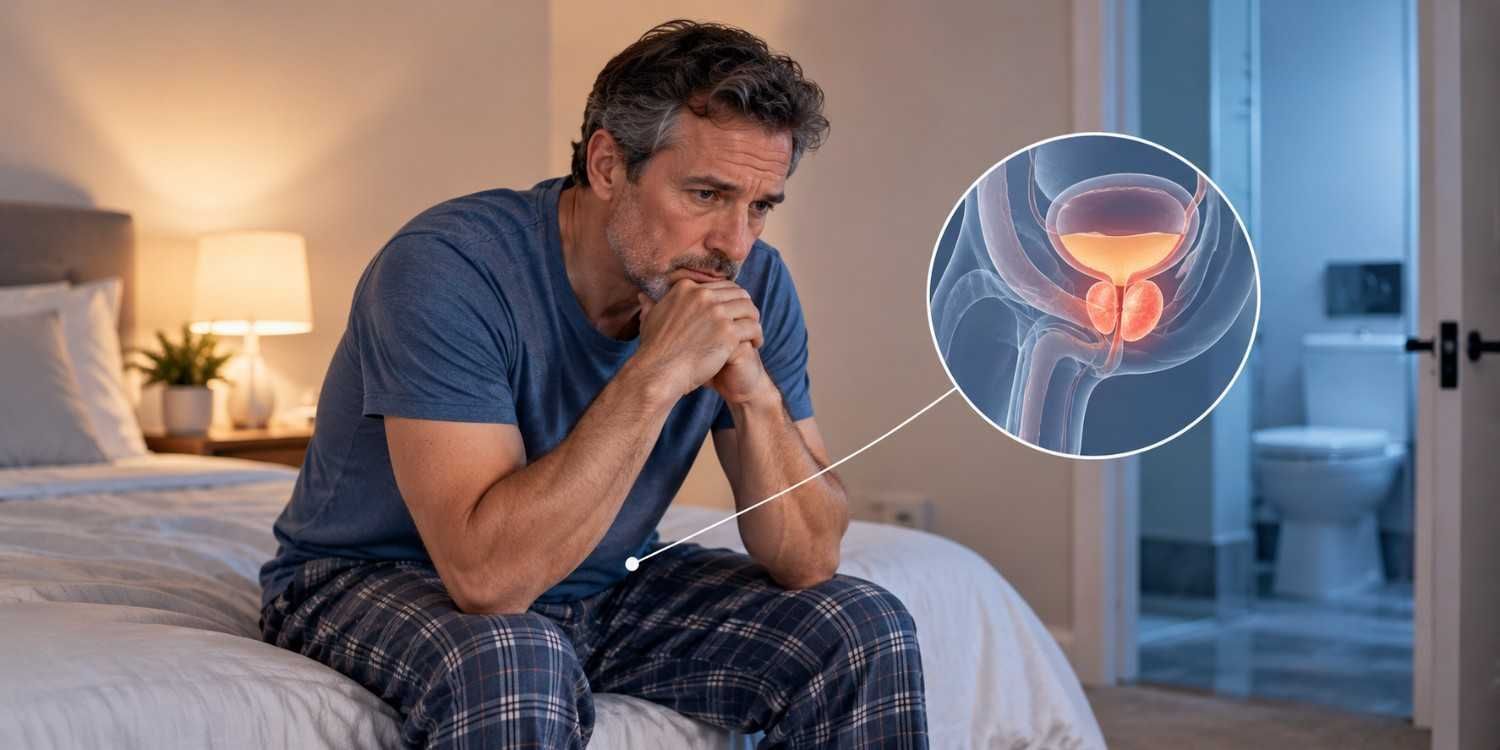
Most men give their prostate little thought until something changes. The stream slows, multiple bathroom trips interrupt your sleep, or a dull ache settles deep in your buttock/anus or near your bladder. Then the guesswork starts, and often, a lot of it is wrong. Most prostate symptoms have a clear, treatable cause. Some start in the prostate. Others start in the surrounding muscles. I have focused on pelvic health for 16 of my over 40 years of practice as a physical therapist, and I meet men every week who were never told about that second group. To tell the two apart, it helps to start with what the prostate does and what can go wrong with it.
What Does the Prostate Do, and What Can Go Wrong?
The prostate is a walnut-sized gland below the bladder and in front of the rectum. It wraps around the urethra (the tube that carries urine from the bladder and then empties outside the body). The prostate also makes up part of the fluid in ejaculate.
Three conditions cause most prostate problems:
- Prostatitis: pain or swelling of the prostate. It affects 10 to 15 percent of men in the U.S.
- Benign prostatic hyperplasia (BPH): a non-cancer enlargement that becomes more common with age.
- Prostate cancer: about 1 in 8 men will get this diagnosis in their lifetime, according to the American Cancer Society.
What Are the Most Common Prostate Symptoms?
Prostate symptoms fall into three groups. Many men have more than one.
- Urinary: a weak or slow stream, trouble starting, waking at night to pee, or feeling the bladder is never empty
- Pain: burning when you urinate, or pain in the perineum (the area between the scrotum and anus), lower back, or hips
- Sexual: pain during or after ejaculation, or changes in erections
These symptoms can also come from conditions other than cancer, such as an enlarged prostate (or pelvic floor muscle tightness/overactivity). That is why a proper checkup matters more than guessing.
Which Prostate Myths Should Men Stop Believing?
These six myths keep men worried or stuck on treatments that do not fit their problem.
Myth 1: An enlarged prostate means cancer
BPH is not cancer. An enlarged prostate and prostate cancer can cause similar urinary symptoms, so your doctor checks for both.
Myth 2: Prostatitis always means an infection
The most common type, chronic prostatitis/chronic pelvic pain syndrome (CPPS), makes up about 90 percent of chronic prostatitis cases. It often has no infection behind it. Current American Urological Association guidance advises doctors not to repeat antibiotic courses when urine cultures are negative.
Myth 3: Kegels fix every prostate problem ( DO NOT Capitalize the next few sentences)
I often see patients who have been told by health professionals or Dr. Google to do lots of keges (strengthening ). Often, engaging in a program of lots of kegels can make pelvic floor issues worse, or more painful. Many men with pelvic pain already have muscles that are too tight. They need to learn to let go before they get stronger, and squeezing harder can make pain worse.
Myth 4: Prostate massage cures prostatitis
Research on massaging the prostate gland itself is weak. Past relief likely came from releasing the nearby pelvic floor muscles. Men often look for a prostate care specialist in Bunker Hill Village when a therapist who treats those pelvic floor muscles fits their needs better. I cover the INFORMATION in my guide to prostate massage therapy in Houston, Texas.
Myth 5: No symptoms means a healthy prostate
Early prostate cancer often causes no symptoms at all. Current U.S. screening guidance advises men aged 55 to 69 to decide about psa testing with their doctor. A digital rectal exam is only a minimal screening tool, and not conclusive or exclusive, often resulting in a need for a more definitive exam from an ultrasound or MRI for more detailed information
Myth 6: Supplements protect your prostate
The evidence does not back this up. In a large U.S. trial, vitamin E taken alone raised prostate cancer risk, and selenium did not lower it. (Eric A. Klein and colleagues, JAMA, 2011; SELECT trial).
How Can Pelvic Floor Muscles Cause Prostate Symptoms?
Your pelvic floor is a group of muscles at the base of your pelvis, running from the pubic bone to the sacrum, and from one hip, horizontally, to the opposite hip, forming a ‘basket/ sling or hammock '. These muscles support your bladder and bowel, control the flow of urine, and help with erection and ejaculation.
Stress, long hours of sitting, and bracing against pain can keep these muscles tense. A tight pelvic floor can squeeze the urethra and/or the nearby nerves. The result looks a lot like a prostate problem:
| Symptom | Prostate causes to rule out | Pelvic floor pattern |
|---|---|---|
| Slow or weak stream | BPH, cancer | Muscles do not relax to let urine flow |
| Burning when you pee | Infection | Burning with clear tests |
| Pain between the legs or when sitting | Prostatitis | Tender muscles and trigger points |
| Pain after ejaculation | Prostatitis | Muscle spasm after climax |
| Leaking after surgery | Surgery effect | Weak or slow muscle response |
When tests are clear, but symptoms continue, the muscles deserve a close look. Nerve irritation can also play a part, which I cover in my post on pudendal neuralgia and chronic prostatitis.
What Helps Prostate Symptoms?
The right help depends on the cause, so most men do best with a doctor and a pelvic floor specialist working together.
Care from your doctor
Your doctor treats infection, checks for cancer, and may prescribe medicine for urinary symptoms. Antibiotics help bacterial prostatitis but not muscle-driven pain.
Men's prostate health therapy
Prostate health therapy is pelvic floor physical therapy for the muscles, nerves, (breathing,) and posture around the prostate. Learning and practicing proper diaphragmatic breathing can also help lessen the tension in these muscles. Many of the men who come to me for men's prostate health therapy in Spring Branch have already tried several rounds of antibiotics. An evaluation with me can include:
- A discussion about your bladder, bowel, and sexual symptoms
- A check of your hips, lower abdomen, spine, posture, trunk/ ribs, breathing, and posture
- There are 3 layers to the pelvic floor, and the third, deepest layer is assessed via the rectum with a gloved/ lubicated digit. With your consent, an internal check and gentle release of tight muscles
- Breathing work, manual soft tissue work, stretching, and a home plan
The AUA (American Urological Association) guideline states that clinicians may offer individualized manual physical therapy, inside and outside, for men with pelvic floor muscle pain.
Daily habits
- Take breaks from long periods of sitting.
- Spread your fluids through the day and drink less close to bedtime.
- Avoid pushing or straining to pee.
Can Pelvic Floor Physical Therapy Help Penile Pain?
Yes, when the pain comes from the muscles or nerves of the pelvis. Pelvic floor physical therapy for penile pain often helps men who notice:
- Burning at the tip with no infection
- An ache after long periods of sitting
- Pain during or after ejaculation
The nerves that supply the penis run through the pelvic floor area, so tight muscles can send pain there.
An erection that lasts more than four hours needs emergency care. I treat penile, testicular, and rectal pain as part of my chronic pelvic pain syndrome care.
How Does Pelvic Floor Care Help Before and After Prostate Surgery?
Leaking and erection changes are common after a radical prostatectomy (surgery to remove the prostate). Learning the right muscle action early can give you a head start.
- Before surgery: Prostate Cancer UK suggests starting pelvic floor exercises four to six weeks before your operation.
- After surgery: Start once your catheter is out, and your surgeon agrees. It can take up to three months to notice a real difference.
Research after surgery is still mixed, so I focus on correct technique, not a set number of squeezes.
Men can still have an orgasm without releasing semen. This is often called a dry orgasm or dry ejaculation. After a radical prostatectomy, the prostate and seminal vesicles are removed, so semen is no longer released at climax.
When Should You See a Doctor?
See a doctor promptly if you have:
- Blood in your urine or semen
- Fever or chills with pain when you urinate
- No ability to pee at all, which needs emergency care
- Back, hip, or PELVIC pain that will not go away
Your Next Step
Prostate symptoms are common, and most have a cause you can treat. Get the right checks first, then make sure someone looks at the muscles too.
Book a Visit With Me
I see men one-on-one at my private, home-based practice in the Memorial area. If you are looking for prostate health therapy in Bellaire, Texas, or nearby, call me at (281) 728-4604. Learn more about my men's pelvic floor services.
Frequently Asked Questions
Do I have to have an internal exam?
No. The internal check is always your choice. I can do a lot from the outside and add internal assessment/ soft tissue work only if you agree.
Do I need a referral to start pelvic floor therapy in Texas?
Texas law lets you start physical therapy without a referral for a limited time. To continue past that window, you need a doctor's referral.
How many sessions will I need?
It depends on your symptoms and how long you have had them. In my practice, treatment usually runs from three weeks to three months.
Can pelvic floor therapy shrink an enlarged prostate?
No. Therapy does not change the size of the prostate. It can ease urgency, leaking, and dribbling by helping the muscles around it work better and gently mobilizing the fluid content of the prostate.
Can stress make prostate symptoms worse?
Yes, it can. Stress often makes the pelvic floor tighten, and tight muscles can increase pain and urgency. Breathing and relaxation work are part of my treatment for this reason.