
Can Heel Pain Affect the Pelvic Floor? The Connection Between Plantar Fasciitis and Pelvic Pain

Heel pain often appears straightforward. Most people assume the problem begins and ends in the foot. Yet the body rarely works in isolated pieces. Persistent heel pain frequently changes how a person stands, walks, and distributes weight through the lower body. Those adjustments can travel upward through muscles, connective tissue, and joints.
In some patients, plantar fasciitis does more than irritate the heel. Altered movement patterns and tension through the body’s connective tissue network may influence structures in the pelvis, including the pelvic floor muscles. When that happens, individuals may notice pelvic discomfort that seems unrelated to the original foot problem.
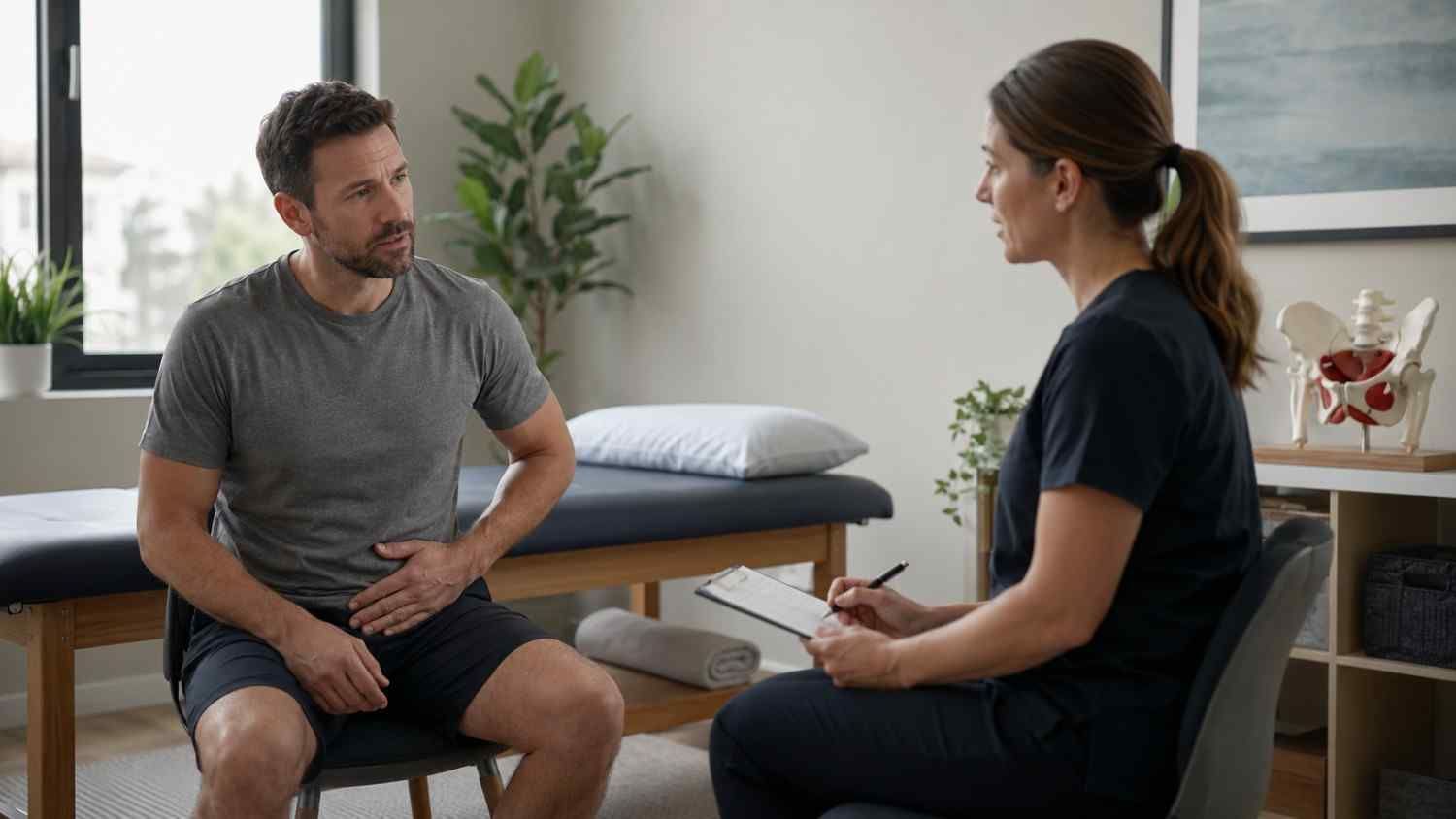
I often see this overlap when evaluating patients seeking pelvic pain physical therapy in Houston, TX. Someone may arrive with pelvic floor symptoms, yet a closer look at movement patterns reveals chronic heel pain or long-standing plantar fasciitis in the background. Understanding how these regions interact helps explain why some people experience plantar fasciitis and pelvic pain in Houston at the same time.
The connection becomes clearer when I examine three areas: the nature of plantar fasciitis, the body’s connective tissue system, and how pelvic floor function responds to changes in movement.
What Is Plantar Fasciitis?
The plantar fascia is a strong band of connective tissue running along the bottom of the foot. It connects the heel bone to the front of the foot and plays an important role in supporting the arch and absorbing forces during walking.
Plantar fasciitis develops when this tissue becomes irritated or overloaded. Repetitive strain, limited ankle mobility, or prolonged standing can gradually stress the fascia near its attachment at the heel.
Common characteristics of plantar fasciitis
- Morning heel pain – sharp discomfort with the first steps after getting out of bed
- Pain after rest – symptoms when standing after sitting for long periods
- Localized heel tenderness – especially along the inner heel
- Increased pain with prolonged standing or walking
Factors that often contribute
- Limited ankle flexibility affects walking mechanics
- Increased physical load from running or high-impact activity
- Changes in gait caused by compensation for discomfort
- Occupations requiring long periods of standing
Many patients look for plantar fasciitis therapy in Houston, TX, when these symptoms persist. While foot-focused care remains important, the effects of heel pain often extend beyond the foot itself. Once pain changes how a person moves, the entire lower body may begin compensating.
The Body Is Connected Through Fascia
To understand how heel pain may influence the pelvis, it helps to look at fascia. Fascia is a continuous web of connective tissue that surrounds muscles, bones, nerves, and organs throughout the body. Rather than separate structures functioning independently, fascia allows movement and tension to distribute across multiple regions.
This connective system plays several roles.
Key functions of fascia
- Force transmission – helping the body distribute load between regions
- Movement coordination – allowing muscles in different areas to work together
- Structural support – stabilizing joints and soft tissues
The plantar fascia is part of this larger connective network. It interacts with structures that extend upward through the calves, hamstrings, gluteal muscles, and into the pelvis. When tension or restriction develops in one area, other parts of the chain may adjust to compensate.
Because of these relationships, long-standing heel pain may influence how the body organizes movement through the hips and pelvis. For individuals already dealing with pelvic floor tension or dysfunction, that additional strain can become relevant.
How Heel Pain Can Influence the Pelvic Floor
Pain changes behavior. When the heel hurts, people rarely walk the same way they did before the injury. Subtle adjustments occur automatically to reduce discomfort.
These compensations often affect how the pelvis moves during walking and standing.
Common compensation patterns
- Altered gait mechanics – reduced heel strike or uneven weight transfer
- Hip muscle overuse – increased reliance on gluteal and hip rotator muscles
- Pelvic alignment changes – slight tilting or rotation during movement
- Protective muscle tension – increased guarding in the lower body
The pelvic floor does not function independently from these changes. These muscles form part of a stabilization system that includes the diaphragm, abdominal muscles, deep spinal stabilizers, and hip musculature. When the lower body shifts its loading pattern, the pelvic floor often adapts.
Over time, this adaptation may lead to excessive muscle tension or coordination problems within the pelvic floor. Some patients seeking pelvic pain physical therapy in Houston, TX, notice that their pelvic symptoms worsen with prolonged walking, standing, or activity that loads the lower body.
In those cases, heel pain may not be the only factor involved, though it can become part of the overall pattern.
Understanding the Pudendal Nerve and Pelvic Pain
The pelvic floor contains several important nerves that support bladder, bowel, and sexual function. One of the most significant is the pudendal nerve.
The pudendal nerve travels through connective tissue and ligament structures in the pelvis. These tissues guide and protect the nerve as it moves through the pelvic region.
Primary functions of the pudendal nerve
- Providing sensation in the perineal and genital regions
- Controlling pelvic floor muscle activity
- Supporting bladder and bowel function
When surrounding connective tissue becomes tight or irritated, some individuals experience symptoms related to nerve sensitivity. These may include burning pain, pressure in the pelvic region, or discomfort while sitting.
Heel pain does not directly cause pudendal nerve conditions. The connection is more subtle. If chronic plantar fasciitis alters gait and increases tension through the hips and pelvic connective tissues, that additional stress may contribute to symptoms in individuals who are already vulnerable to pelvic floor dysfunction.
Patients looking for pudendal nerve pain therapy in Houston often benefit from a careful evaluation of movement patterns throughout the lower body, including the feet.
How Pelvic Physical Therapy Can Help
Pelvic physical therapy approaches pelvic pain from a whole-body perspective. Instead of focusing only on the painful area, the evaluation considers how movement patterns, connective tissue tension, and muscle coordination influence pelvic function.
At Beckham Physical Therapy and Wellness, I assess how different parts of the body interact during movement and daily activity. This approach helps identify contributing factors that may not appear obvious at first.
Pelvic floor therapy may involve several elements.
1. Movement assessment
- evaluating walking mechanics
- observing pelvic and hip coordination
- identifying compensation patterns linked to foot pain
2. Pelvic floor muscle treatment
- restoring normal muscle coordination
- reducing excessive pelvic floor tension
- improving the balance between relaxation and activation
3. Connective tissue mobility
- addressing restrictions in surrounding tissues
- improving movement between the hips, pelvis, and lower body
- supporting healthier tissue mechanics
4. Breathing and pressure management
- coordinating the diaphragm with the pelvic floor
- improving abdominal and spinal support
- reducing unnecessary strain on pelvic structures
For individuals experiencing pelvic floor pain treatment in Houston, this broader view of the body can reveal patterns connecting heel pain, posture, and pelvic muscle tension.
Some patients also benefit from targeted work addressing connective tissue restrictions within the pelvic region. In cases where tissue tension contributes to symptoms, pelvic floor connective tissue therapy in Houston may help restore more balanced movement within the pelvis.
When Heel Pain and Pelvic Pain Appear Together
Not every case of plantar fasciitis leads to pelvic symptoms. Still, certain situations suggest the two issues may interact.
Situations where evaluation may help
- Heel pain and pelvic pain occurring at the same time
- Pelvic discomfort worsening with walking or prolonged standing
- Persistent plantar fasciitis that does not fully improve
- Pelvic floor tension developing after long periods of altered gait
In these scenarios, examining how the body distributes movement and load can provide valuable insight. A careful assessment often reveals patterns linking foot mechanics, hip activity, and pelvic floor muscle behavior.
Patients experiencing plantar fasciitis pelvic pain in Houston sometimes find that addressing pelvic floor function improves symptoms that previously seemed unrelated to the foot.
A Whole-Body Approach to Pelvic Pain
The human body functions as an integrated system rather than a collection of separate parts. Structures in the foot, hips, pelvis, and pelvic floor interact through both connective tissue and coordinated movement.
When heel pain changes how the body moves, those adjustments may influence pelvic mechanics. In some individuals, especially those with existing pelvic floor tension, these changes can contribute to pelvic discomfort.
Pelvic physical therapy focuses on restoring balanced movement patterns and improving the coordination of the pelvic floor with the rest of the body. Through careful evaluation and individualized treatment, it becomes possible to address factors that may otherwise remain hidden.
At Beckham Physical Therapy and Wellness, I evaluate how the foot, hips, pelvis, and pelvic floor interact during everyday movement. This perspective helps identify contributors to pelvic discomfort that may not appear during a standard evaluation focused only on one area of the body.
Seeking Help for Heel Pain and Pelvic Floor Symptoms
If you are experiencing persistent heel pain along with pelvic discomfort, a comprehensive evaluation may help uncover the connection. Addressing the way the body distributes tension and movement can improve both pelvic function and overall comfort.
For individuals looking for Plantar fasciitis therapy in Houston, TX, I provide one-on-one evaluation and treatment that examines how heel pain, connective tissue tension, and pelvic floor function interact. Identifying these patterns often allows treatment to address the root of the problem rather than only the symptoms.